I AM Maat
Orienting the creative presence toward truth, balance, and life
There are words that describe.
And there are words that set something in motion.
“I AM” belongs to this second class.
When we say those words with presence, we are not simply reporting who we believe ourselves to be. We are giving direction to a force. Consciousness gathers around an affirmation, attention finds a direction, and our decisions begin to organize themselves in relation to what we have named.
Saying “I am incapable” does not produce the same inner world as saying “I am capable of learning.” Saying “I am a victim of what happens” orients us differently than saying “I am responsible for how I respond.” Words do not magically control reality, but they intervene deeply in the way we perceive it, inhabit it, and act within it.
In the spiritual teachings associated with Saint Germain, the expression “I AM” is understood as a way of recognizing and orienting the creative presence with awareness.
It does not refer only to the psychological self, the personality, or the set of stories with which we build our everyday identity. It points to a deeper presence: what remains while our thoughts, emotions, roles, and circumstances change.
When I say “I AM,” something in me recognizes itself as a center of experience, but also as part of a totality.
I am inside existence, perceiving it from an unrepeatable position.
And at the same time, existence is inside me, expressing itself through that perspective.
The affirmation contains that paradox: it makes me singular and integrates me.
I am not the totality, but the whole finds in me a particular way of seeing itself, experiencing itself, and acting. I am a singularity, though never a completely separate entity.
From there, what we place after “I AM” matters.
It can shut us inside a fixed identity or open a direction.
It can repeat a conditioning or remember a power.
It can reinforce separation or return us to the awareness that we are a singular expression of something much broader.
To say “I AM peace” is to commit to recognizing, sustaining, and expressing that quality.
To say “I AM truth” invites us to observe where our word, our perception, and our conduct do not yet correspond to one another.
To say “I AM the infinite presence made manifest on Earth” does not have to be taken as a declaration of personal omnipotence. It can be read as a reminder: the infinite reaches matter only through finite forms, concrete decisions, and bodies willing to embody it.
Every spiritual affirmation finds its proof in experience.
Presence must pass through the word.
The word must pass through action.
And action must find a form in the world.
For me, to say “I AM Maat” is to choose an orientation.
Maat
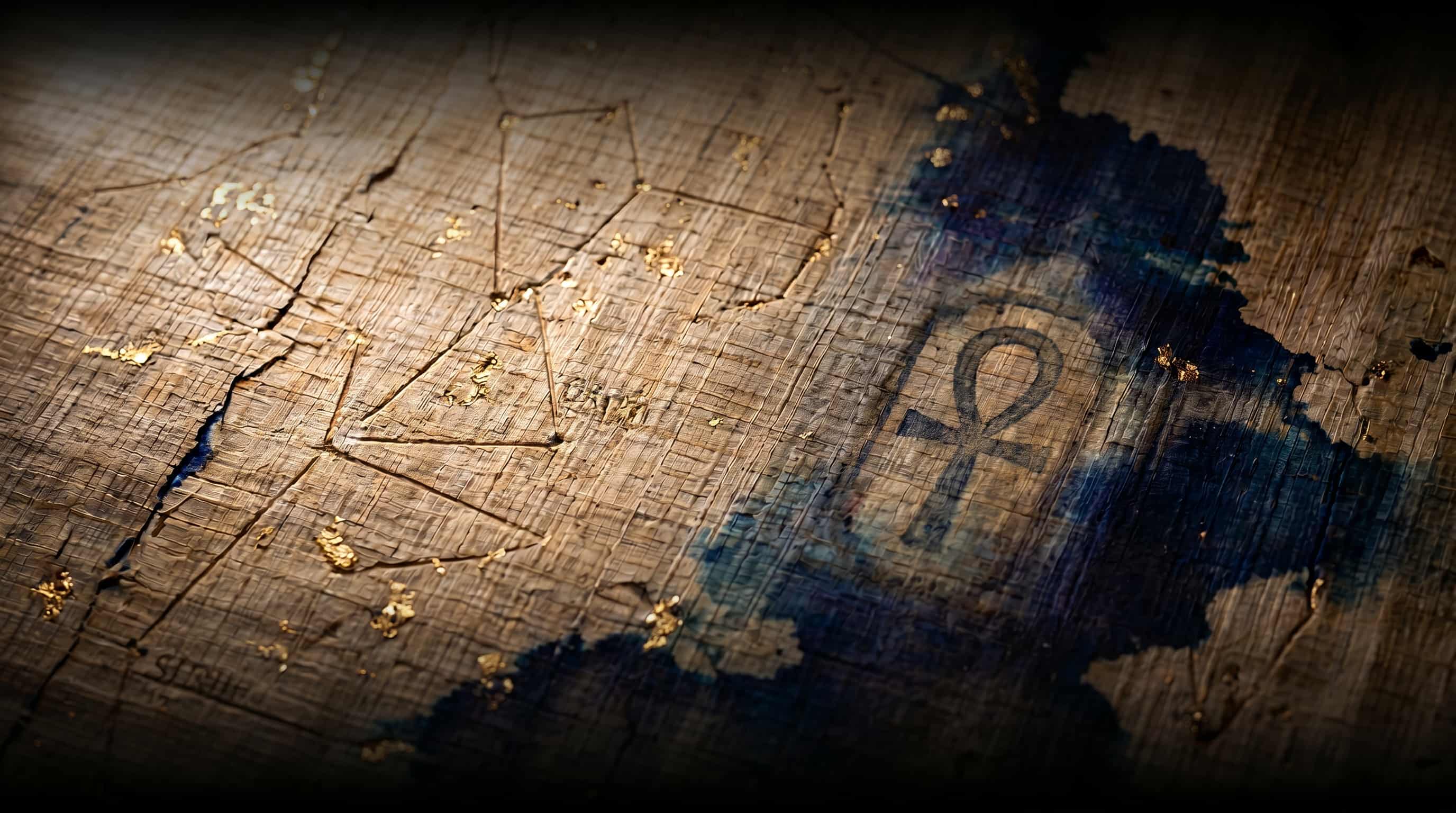
In ancient Egypt, Maat named and personified a principle of truth, justice, balance, harmony, and order.
It was not only a moral norm applied to persons. It stood for a broader correspondence between the cosmos, nature, social organization, and human conduct.
To inhabit Maat meant taking part in that balance with awareness.
Truth did not consist only in stating correct facts. It also demanded coherence between the word spoken, the intention that gave rise to that word, and the consequences it produced.
Justice was not an abstraction separate from life. It was the search for proportion in relationships, in the exercise of power, and in the distribution of what makes existence possible.
Harmony did not mean the absence of tension either. A harmonic system can contain different and even opposed forces. Harmony arises when each one takes the place that is theirs and plays its part in the whole without trying to replace it.
Maat is measure.
Not the measure that reduces all things to a uniform scale, but the one that lets us recognize the right proportion for each relation.
When to speak and when to listen.
When to begin and when to wait.
When to sustain a form and when to let it transform.
When to take the center and when to make space for someone else to take it.
When to give and when to receive.
Maat reminds us that even a luminous intention can lose its direction when it lacks balance.
That is why, in an era of growing capacities, this archetype takes on a particular relevance for me.
Humanity today has tools that can modify matter, information, attention, the economy, culture, and relationships at extraordinary speed. We can create systems that affect the lives of millions of people before we fully understand their consequences.
Power has grown.
The question is whether our measure will grow as well.
A symbolic key
For many years I had dreams in which I was flying.
It wasn’t always the same scene, but there was a persistent familiarity with wings, height, and the possibility of moving between dimensions governed by rules unlike those of waking life.
Symbols, intuitions, and messages received through people from diverse traditions also appeared. For years I experienced them as fragments: meaningful pieces that could not yet compose a complete image.
On a vision quest, a shaman told me:
You are Maat.
I didn’t receive those words as a literal proclamation to be proven before others. Nor as a spiritual title that would grant me authority.
They were a key.
When I heard them, experiences that until then had seemed separate began to fall into place: the dreams of wings, my discomfort in the face of injustice, the need to reconcile apparently opposed worlds, the search for coherence, and the impulse to create structures that could sustain a vision. Everything found a common image.
The archetype offered a language for understanding part of my own course.
That is what symbols do when they arrive at the right moment: they do not replace our identity, but they can illuminate it. They do not define once and for all who we are, though they reveal a direction that was already acting in us.
Since then, Maat has become a practice for me.
Not something I possess.
Something I try to respond to.
The archetype belongs to no one
Archetypes pass through cultures, times, and people because they express deep patterns of human experience.
We can meet them through a spiritual tradition, a dream, a work of art, a crisis, a relationship, or an image that, inexplicably, seems to recognize us before we manage to understand it.
No one can claim an archetype.
We can embody it in part, enter into relation with it, and let it orient a stage of our existence. We can also distort it, idealize it, or use it to inflate our own identity.
That is why saying “I AM Maat” demands humility.
It does not mean:
“I am the truth and others must follow me.”
It means:
“I choose to put my perception, my word, and my work under the measure of truth.”
It does not mean:
“I possess balance.”
It means:
“I accept the constant task of seeking it.”
It does not mean:
“My vision is the order.”
It means:
“I commit myself to examining whether the form I am creating corresponds to what I declare myself to serve.”
Maat does not become a finished identity.
It remains a question.
Is there truth in what I am saying?
Does justice exist in the way value circulates?
Does the structure protect what it says it cares for?
Am I taking my own place, or claiming the whole process?
Does my way of acting produce harmony, or does it require others to shrink in order to sustain that form?
Does what I am creating enlarge life, or limit its capacity to express itself?
These questions matter more than any name.
Between worlds
An important part of my own course has consisted in moving between worlds that are often presented as incompatible.
The symbolic, spiritual, and intuitive world.
And the technological, organizational, and material world.
I was never able to fully accept that I had to choose between them.
Intuition without form can hang suspended in a possibility that never touches the ground. A structure disconnected from its purpose can become efficient and at the same time deeply empty.
We need both dimensions.
We need to listen to what does not yet have words and to develop the capacity to put it into language.
We need to receive the vision and do the labor of turning it into agreements, systems, budgets, code, practices, and relationships.
In the Tree of Life, the highest light does not complete its course while it stays in the sphere of inspiration. It must pass through levels, polarities, and forms until it reaches Malkuth: the kingdom of matter, of the body, and of concrete experience.
A vision is complete when it can be inhabited.
That means accepting limits.
Accepting that the purity of the idea will be tested by the complexity of human relationships. That contradictions, different rhythms, material needs, and unforeseen consequences will appear.
Embodiment does not degrade purpose.
It reveals purpose.
A vision that can keep its beauty only while it stays away from reality has not yet found its form.
That is why my practice is not only to imagine possible futures.
It is to join vision to action.
To listen to the field—its signals, relationships, and emerging possibilities—and to understand what architecture it needs.
To recognize connections that are still invisible and to create the conditions for them to express themselves.
To give form without confining.
To organize without reducing.
To build structures that can evolve without losing their purpose.
That is where Maat stops being a spiritual image and becomes a measure for creation.
Truth
Truth is a practice of correspondence.
It does not come down to saying what we take to be true. It also means observing where we speak from, what we leave out, what effect our words produce, and how far we are willing to correct them when reality shows us something different.
In an era of instant narratives, synthetic images, and systems that can confirm almost any perspective, truth requires a discipline of its own.
We need to distinguish what resonates from what merely suits us.
Intuition, from desire.
Knowledge, from a story so well built that we end up mistaking it for the world.
Truth does not eliminate mystery.
It lets us inhabit the mystery without falsifying it.
We can recognize a spiritual experience without demanding that it become a universal explanation. We can receive a vision without using it to avoid contrast. We can trust an intuition and at the same time let it speak with evidence, practice, and the way others see.
Truth needs openness.
And it also needs measure.
Balance
Balance is not stillness.
It is a dynamic relation between forces that are constantly changing.
A body stays in balance by making countless adjustments. So does a community. A project, a relationship, and a life need to continually review the proportion between impulse and rest, autonomy and belonging, giving and receiving, vision and sustainability.
For a long time we have associated purpose with sacrifice.
As if what serves the whole had inevitably to empty the person who carries it forward.
That logic does not regenerate.
Giving that consumes its own source ends up weakening the work and reproducing unbalanced relationships. Abundance, by contrast, can be understood as the capacity to sustain, care for, continue, and multiply what contributes value.
Balance includes receiving.
It includes setting limits.
It includes recognizing the value of our time, our experience, and our creations.
It also means knowing when a responsibility is ours and when we are taking the place that someone else needs to learn to inhabit.
Harmony does not demand doing everything.
It demands doing with presence what is ours to do, and letting the whole complete itself through others.
Justice
Justice asks how power, resources, and consequences circulate.
Every structure distributes something.
Visibility.
Authority.
Risk.
Time.
Attention.
Money.
The capacity to decide.
Even when that distribution was not designed with awareness, it exists.
To embody Maat means making that distribution visible.
Asking who benefits, who is exposed, who can take part, and who keeps the possibility of leaving. Observing whether a community depends on a single person, whether a platform captures the knowledge others produced, or whether an organization declares cooperation while rewarding only individual competition.
Justice begins when we stop treating architecture as something neutral.
Values do not live only in declarations.
They live in permissions, contracts, interfaces, incentives, and forms of governance.
Coherence begins in our own relationships, decisions, and ways of building.
Harmony
Harmony does not erase difference.
It needs it.
A single note does not make a composition. Music appears when different sounds find a relation that produces meaning.
The same happens between people.
Each person arrives with a perspective, a sensibility, and a capacity that no one else can reproduce exactly. Diversity becomes fertile when it finds a field that receives it without demanding homogeneity.
To harmonize is not to get everyone to think alike.
It is letting each part recognize its place and relate to the others without losing its center.
That is why Maat leads naturally from the I to the we.
Inner truth does not find its full realization in isolation. It needs to enter into relation with others, to be contrasted, to offer itself, and to receive what they see from different positions.
Individual presence becomes a work when it finds a field in which to take part.
The work as proof
To embody an archetype is not to speak about it.
It is to let it question our forms.
In my case, that proof happens in every creation.
In the way a technology treats people’s knowledge.
In the agreements by which an organization distributes authority.
In the relation between purpose and economic model.
In the care of those who sustain a work.
In the capacity to recognize when a vision needs perseverance and when it needs to be corrected.
In the willingness to receive counsel without surrendering my own authority.
Maat appears there.
In the distance between what I say and what I do.
In the tension between the beauty of the vision and the complexity of its manifestation.
In the question of the most just way of making value circulate.
In the decision to build bridges when walls could offer an immediate benefit.
In the attempt to orient technology toward cooperation, sovereignty, and care.
Every work reveals how much of our declaration managed to reach matter.
And every incoherence can become an opportunity to return to measure.
A shared orientation
Soymaat is my public way of expressing this orientation.
It is the signature from which I share a vision, show my creations, and open a door to dialogue.
But “I AM Maat” is not a formula reserved for me.
Anyone can invoke that principle if they feel the call to orient their creative capacity toward truth, balance, justice, and harmony.
They can do it with those words or with others.
What is essential is not the name.
It is the direction.
We can say:
I AM clarity in the midst of confusion.
I AM presence in the midst of speed.
I AM cooperation in the midst of fragmentation.
I AM a creative force in the service of life.
Every affirmation brings with it a responsibility.
After saying it, we must let it pass through our decisions.
Because the word that does not transform the way we act ends up becoming a representation of what we do not yet embody.
The affirmation is the beginning.
The practice is its truth.
I AM Maat
I say “I AM Maat” the way someone chooses a compass.
Not because I have come to fully stand for what it names, but because I accept walking in that direction.
I say it to remember that truth needs a body.
That balance includes movement.
That justice lives in structures.
That harmony needs singularities willing to enter into relation with one another.
That every creative capacity takes on meaning from what it serves.
I say it to remember that the spiritual world and the material world are not separate.
The vision descends.
Matter responds.
Experience transforms the vision.
And a new correspondence can begin.
“I AM Maat” is an affirmation, a practice, and a commitment.
A way of orienting the creative presence toward the world I choose to help bring into being.
But no presence entirely fulfills its purpose alone.
The archetype finds a body in a person.
The work finds power in the encounter.
And singularity begins to reveal its meaning when it recognizes the fabric it is part of.
The next question, then, is no longer only who I am.
It is:
The weaving of a new humanity begins there.